
Globotel
Architecting a scalable service blueprint and unified information architecture for a next-gen telecom platform.
The Strategy
The Overview
The Challenge
The Objective
Discovery & Insights
Journey Abandonment
Through qualitative interviews, I discovered that users frequently abandoned the platform due to deeply nested navigation when seeking self-service support.
Workflow Inefficiency
I observed that institutional clients experienced significant friction, navigating multiple redundant steps just to bulk-provision new SIMs.
The Trust Deficit
My empathy mapping sessions highlighted that a lack of transparency around "hidden fees" was the primary emotional stressor for retail users.
Empathy Mapping & Personas
The Retail User
Needs Transparency & Speed
- GoalPay bills instantly and understand data usage without calling support.
- Pain PointConfusing terminology and hidden charges on monthly statements.
- BehaviorRelies entirely on the mobile app for account management.
The Institutional Client
Needs Control & Scale
- GoalBulk provision hardware and manage enterprise contracts efficiently.
- Pain PointRedundant approval loops and inability to view aggregate billing data.
- BehaviorUses desktop dashboard heavily; relies on exportable reports.
Conceptual Before & After: Architecture & Terminology
Fragmented Ecosystem & Complex Terminology
Unified Dashboard & Streamlined UX
The Unified Architecture
By consolidating the fragmented user journeys into a singular architectural framework, I established a robust foundation. My blueprint mapped the complex interplay between the retail mobile experience and the heavy-duty institutional desktop dashboard, aligning front-stage actions with back-stage legacy systems.
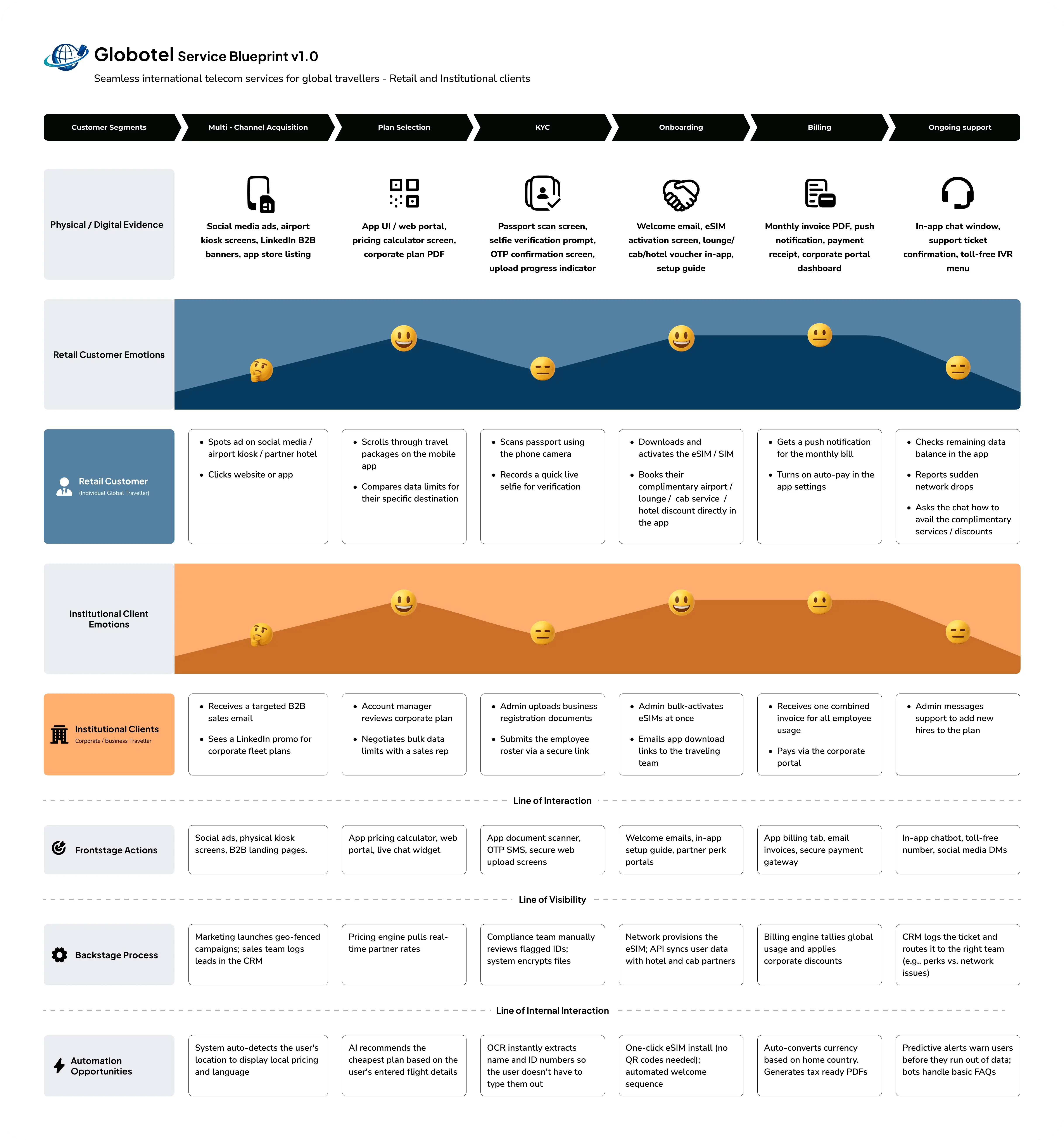
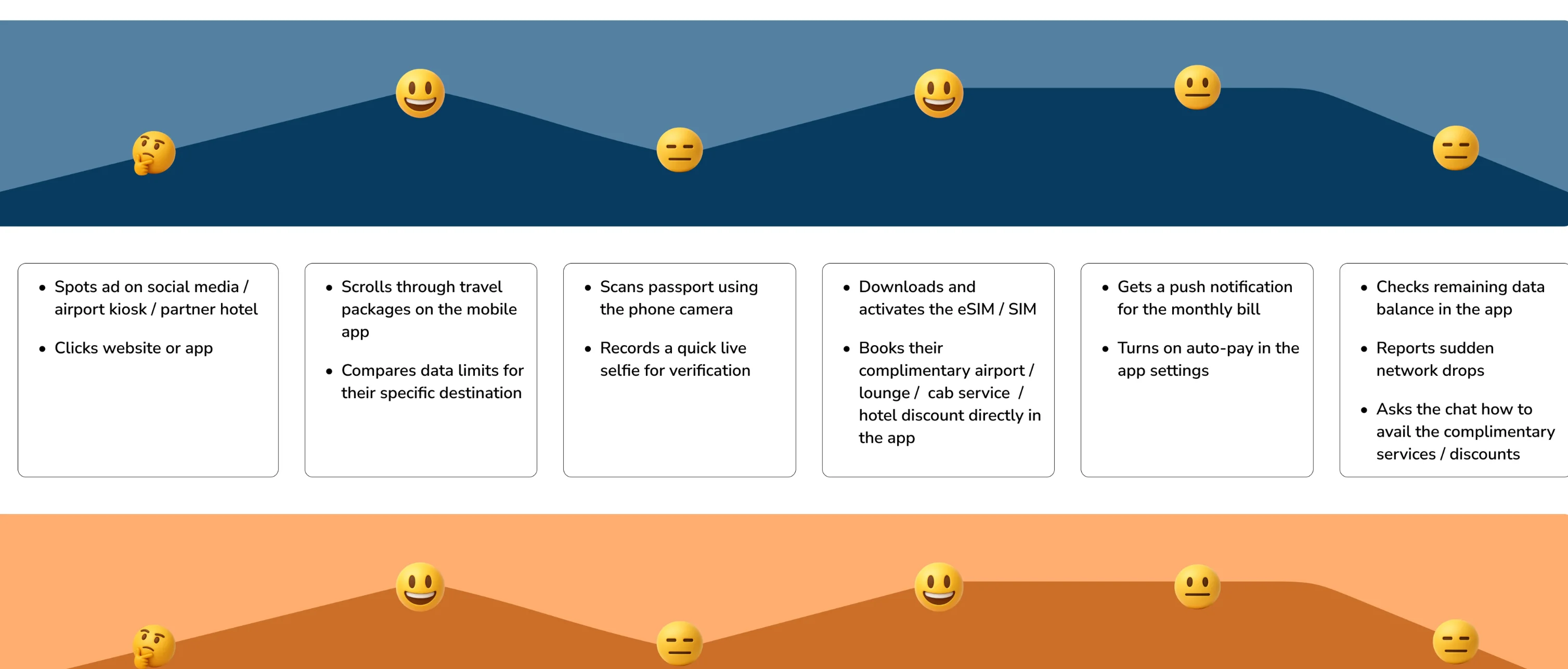
Mapping front-stage SIM activation flows directly to legacy API handoffs.
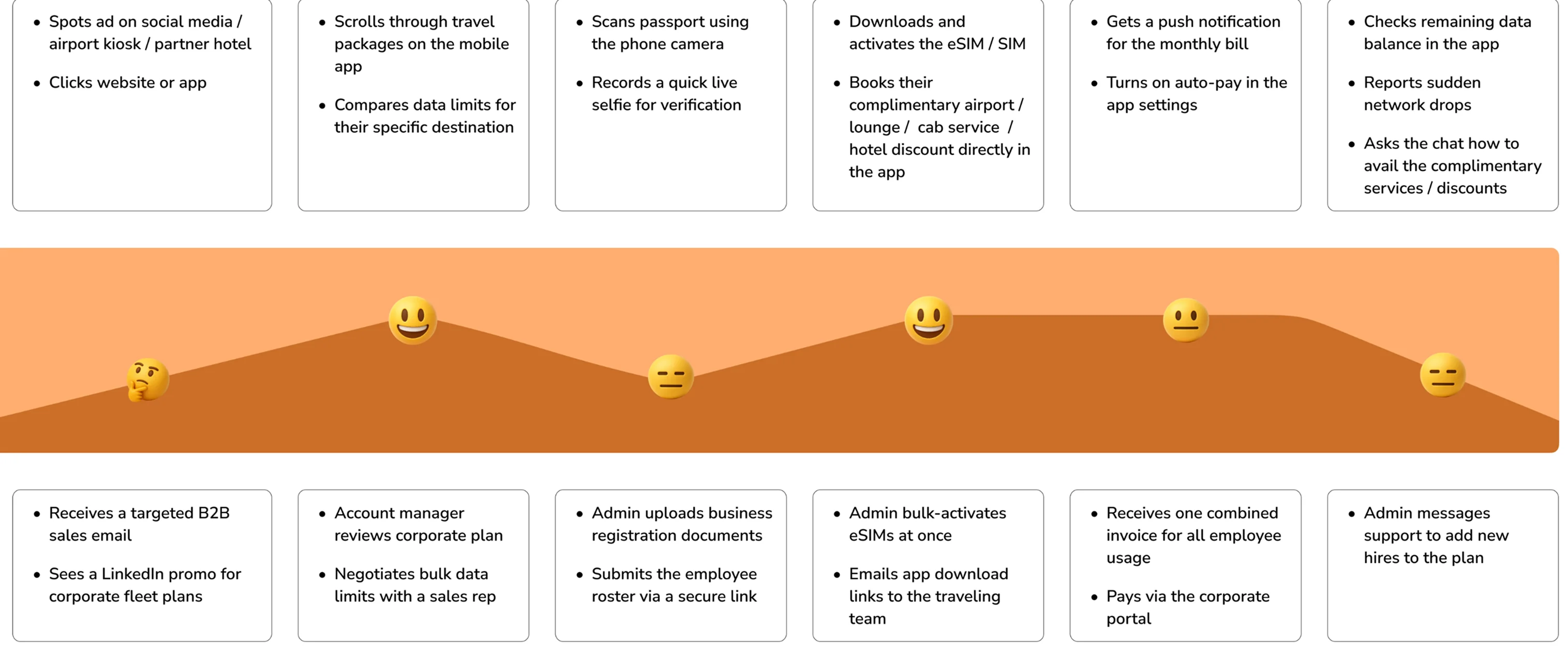
Identifying and bypassing redundant auth checks in back-stage processes.
Hypothesized Outcomes & Measurement Strategy
Projected Impact
By restructuring the core architecture, I established a foundation built for scale and clarity. This strategic realignment resulted in the following hypothesized business impacts:
- Engineering Efficiency: Projected 30% decrease in engineering cycles by removing redundant steps in the newly designed bulk SIM provisioning flow.
- User Retention: Anticipated reduction in user journey abandonment by flattening the mobile app navigation hierarchy from five levels deep to a maximum of three.
Post-Launch Validation Plan
To ensure these hypothesized outcomes manifest post-launch, I designed a rigorous validation strategy focused on the core friction points identified during discovery.
Efficiency Gains
Track time-on-task for the bulk SIM provisioning flow to validate efficiency gains.
Support Deflection
Measure the reduction in support tickets related to nested navigation and terminology confusion.